Our research focuses on mechanisms of action planning, multisensory integration, attention control, and different levels of body representation. Above all, we are interested in neural processes, which we aim to describe mechanistically.
One of our main goals is to describe human experience and behavior mechanistically—that is, in light of the underlying computational principles and neurobiological implementation.
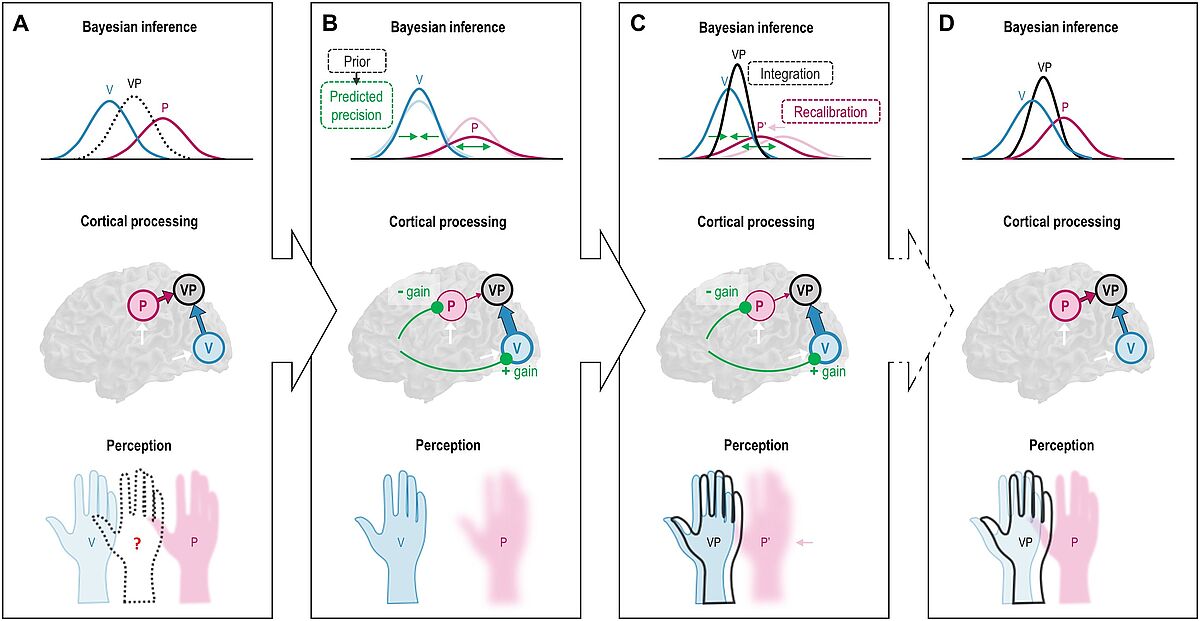
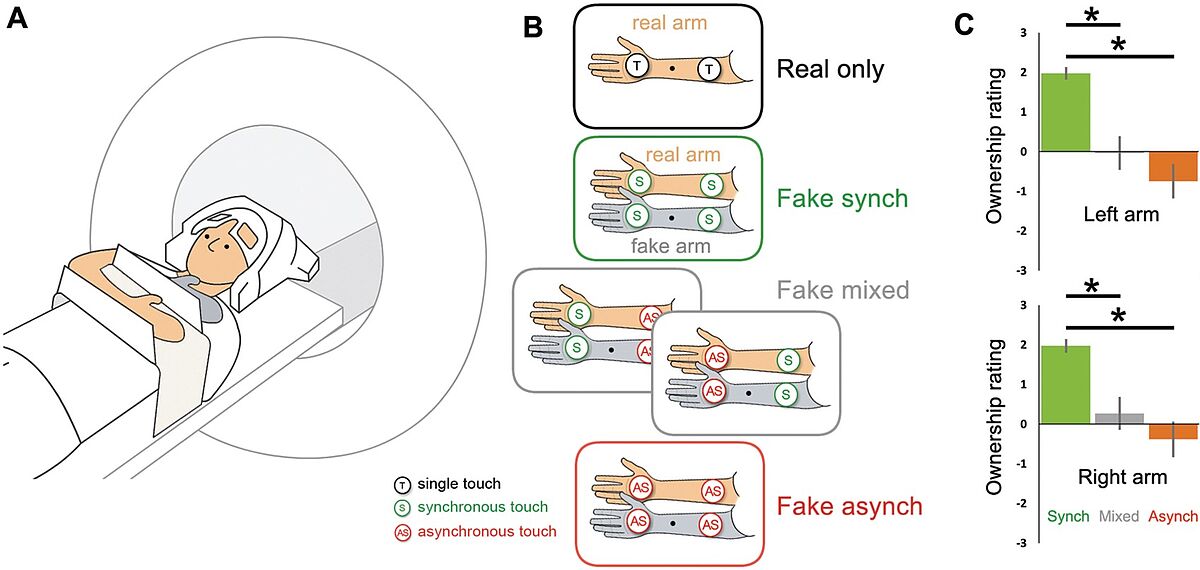
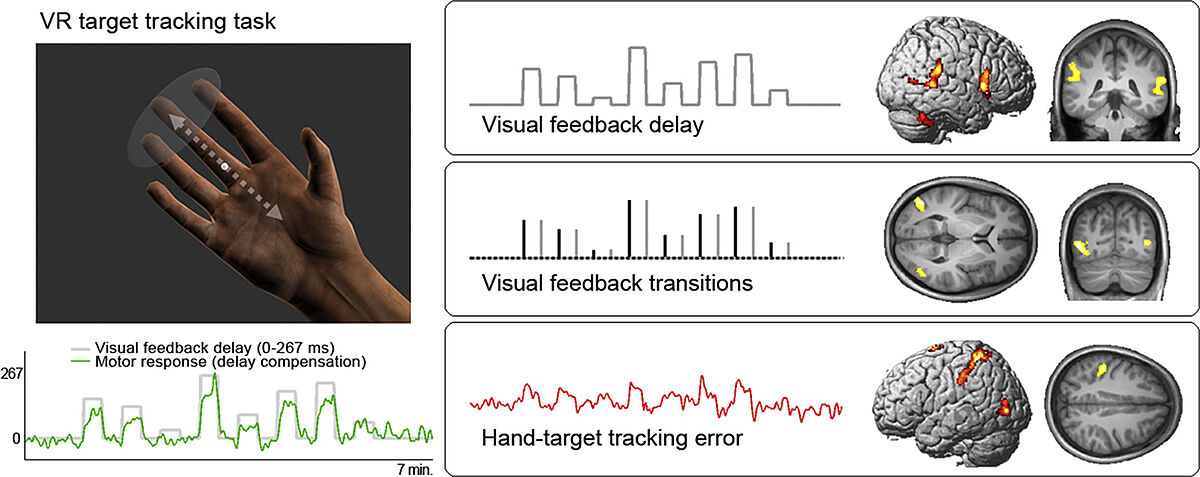
Here, we use the example of the “rubber hand illusion,” in which an artificial hand is perceived as part of the body. Copyright © 2022 Limanowski, Neuroscience & Biobehavioral Reviews, Volume 134, March 2022, 104401, https://doi.org/10.1016/j.neubiorev.2021.10.023 under https://creativecommons.org/licenses/by-nc-nd/4.0/ (CC BY-NC-ND 4.0) In addition to a variety of measurement and stimulation methods, we prefer to use virtual reality and motion capture to create ecologically valid experimental environments. This allows us to investigate novel visuomotor learning and adaptation processes.
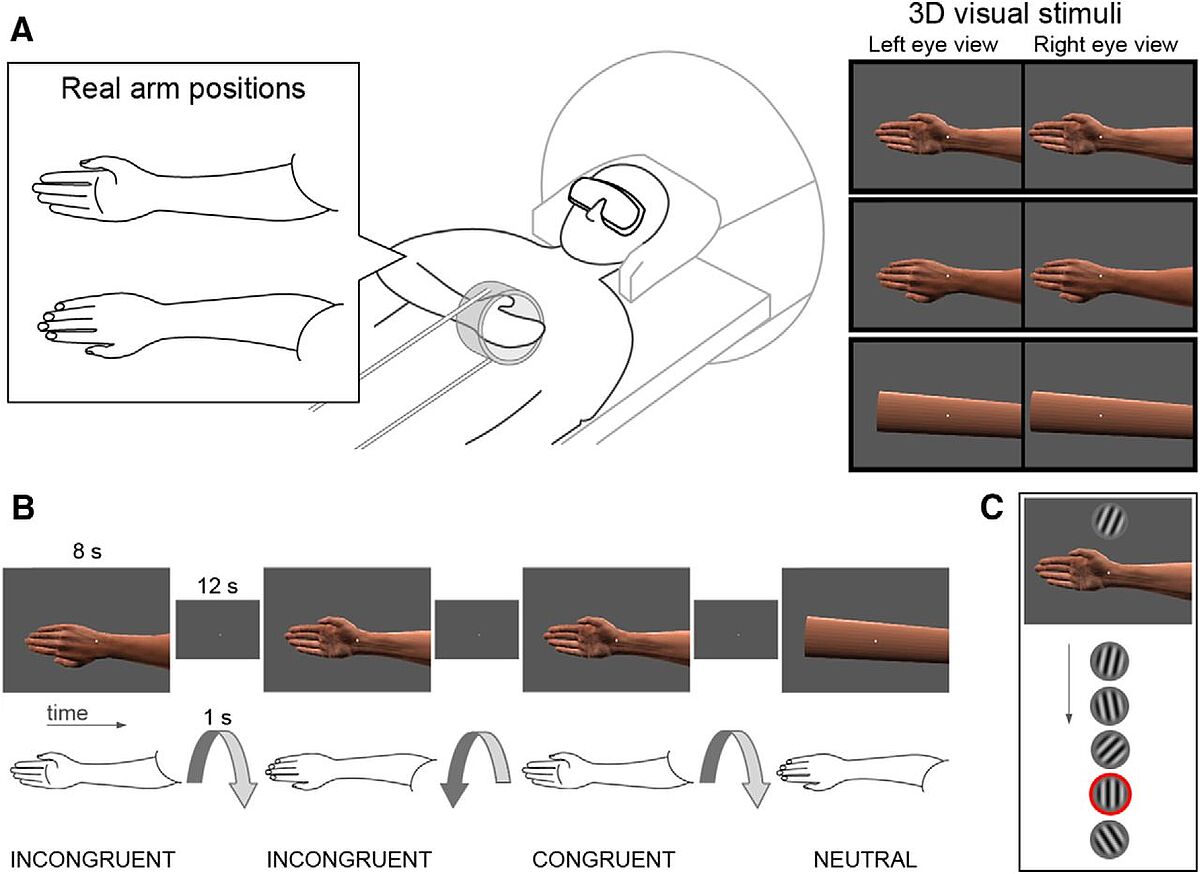
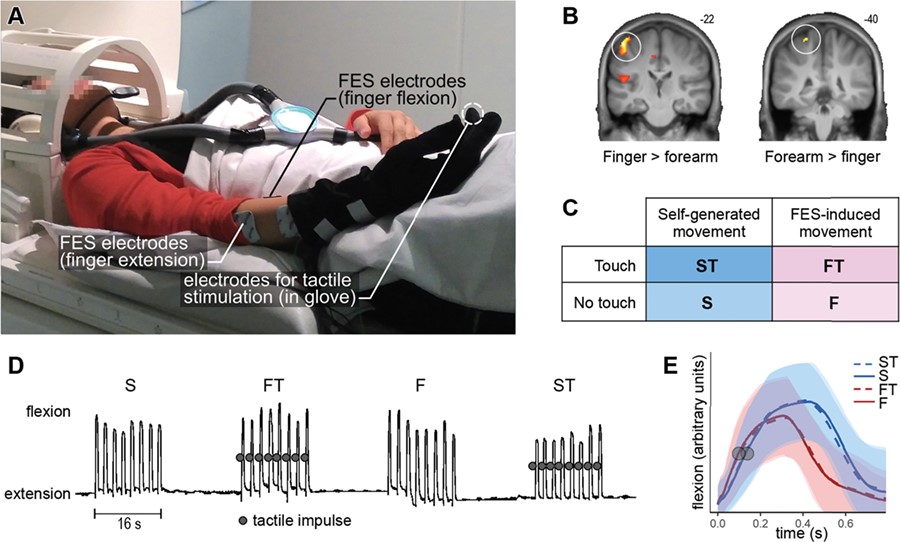
Some examples of our experimental environments :
Copyright © 2016 Limanowski & Blankenburg Journal of Neuroscience 36(9) 2582-2589; DOI: https://doi.org/10.1523/JNEUROSCI.3987-15.2016 under the Creative Commons Attribution 4.0 International License (https://creativecommons.org/licenses/by/4.0/ ) Copyright © 2020 Limanowski et al., Cerebral Cortex, Volume 30, Issue 2, February 2020, Pages 607–617, https://doi.org/10.1093/cercor/bhz111
Under the Creative Commons CC BY license (Modified)
Copyright © 2016 Limanowski & Blankenburg, Social Cognitive and Affective Neuroscience, Volume 11, Issue 7, July 2016, Pages 1130–1140, https://doi.org/10.1093/scan/nsv079
Creative Commons CC-BY-NC
Copyright © 2020 Limanowski et al. NeuroImage, Volume 222, 15 November 2020, 117267.
https://doi.org/10.1016/j.neuroimage.2020.117267
Modified, reprinted under https://creativecommons.org/licenses/by-nc-nd/4.0/ (CC BY-NC-ND 4.0)
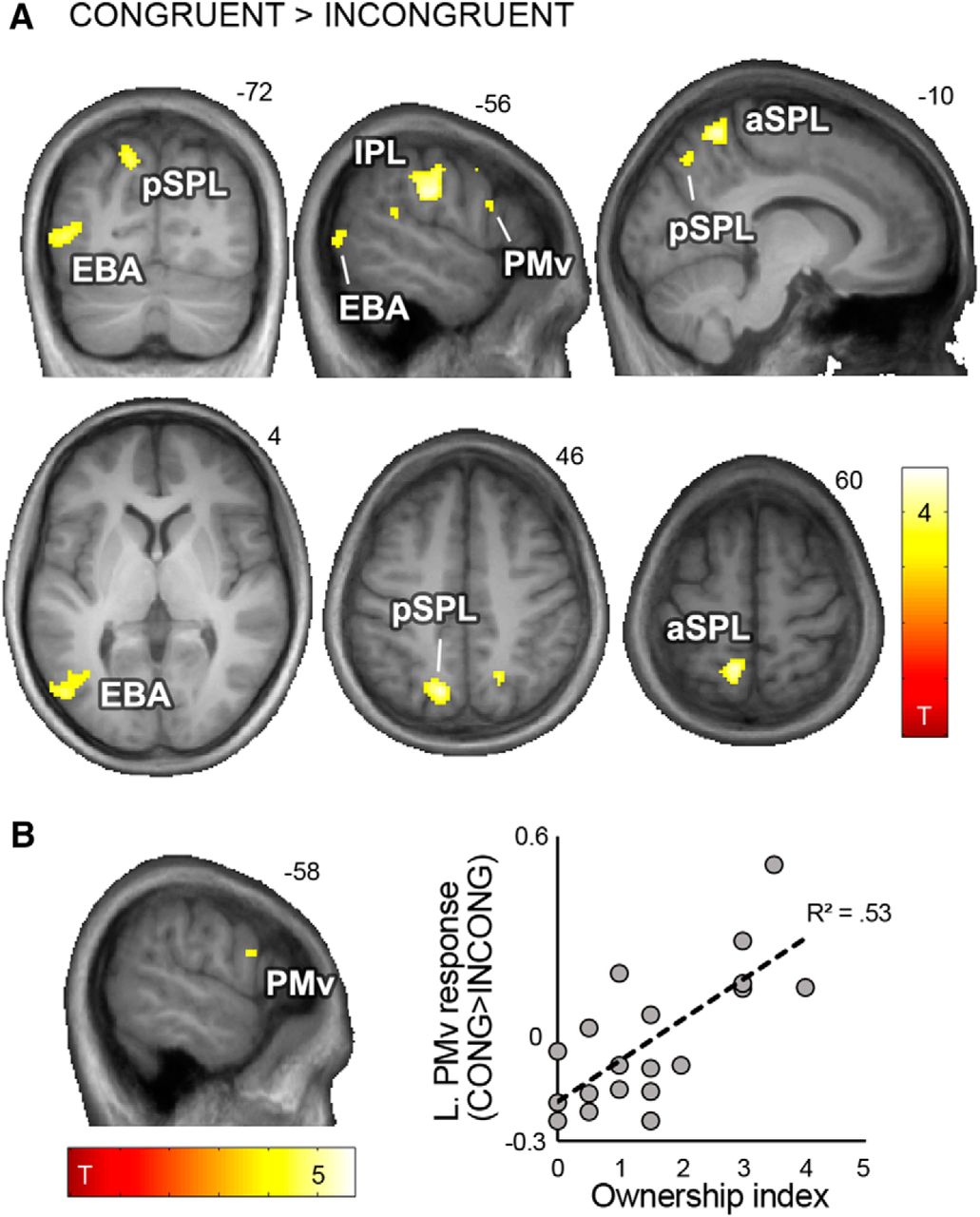
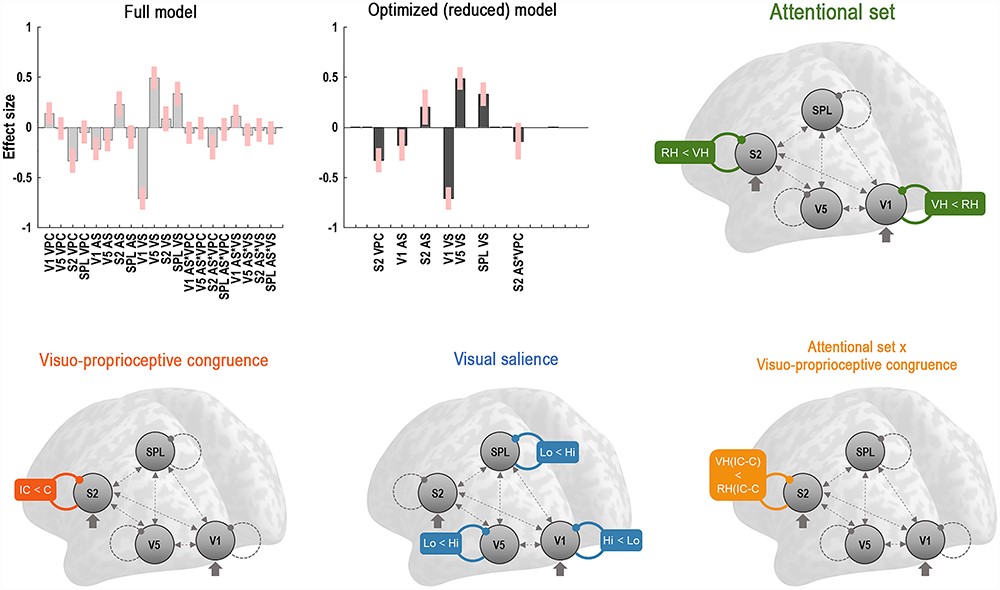
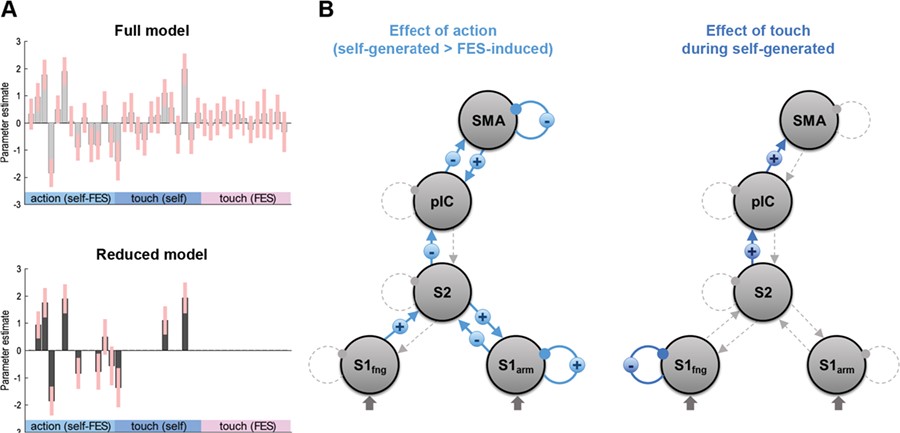
Identification of a fronto-parietal network for multisensory arm representation in the human brain, replicating results from single-cell recordings in macaque monkeys. The network is activated when a virtual hand position is integrated with the subject's own (proprioceptive) hand position. Copyright © 2016 Limanowski & Blankenburg Journal of Neuroscience 36(9) 2582-2589; DOI: https://doi.org/10.1523/JNEUROSCI.3987-15.2016 under the Creative Commons Attribution 4.0 International License In addition to investigating activity in individual brain regions, we also want to describe network effects in terms of communication between brain regions. Using methods such as dynamic causal modeling, we were able to describe sensory weighting processes during multisensory conflicts, for example.
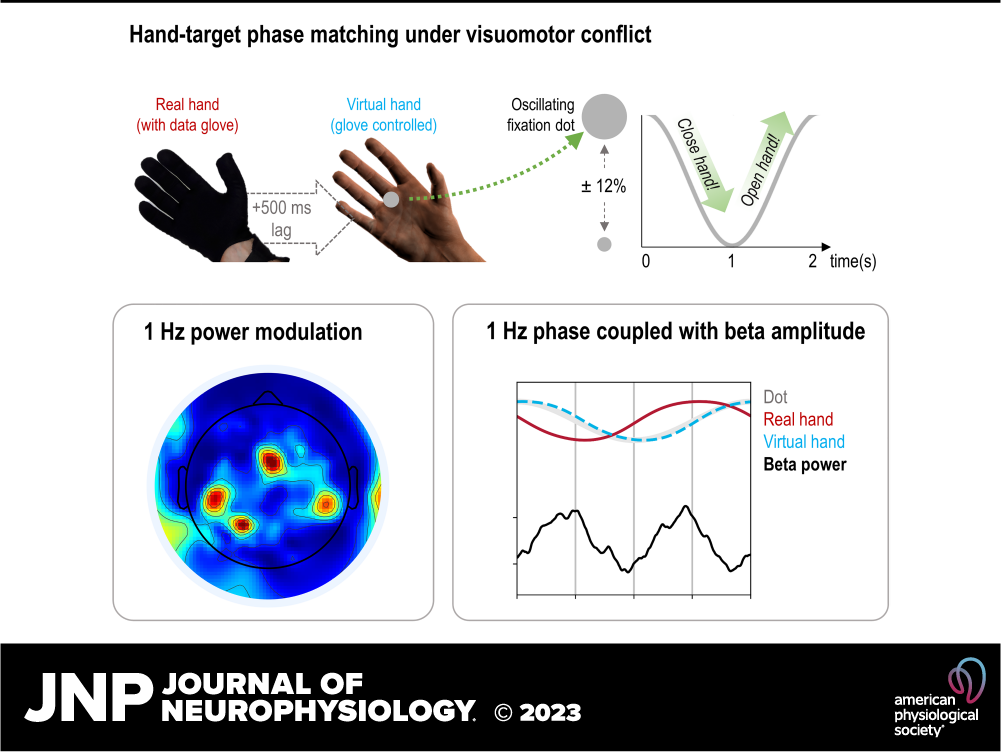
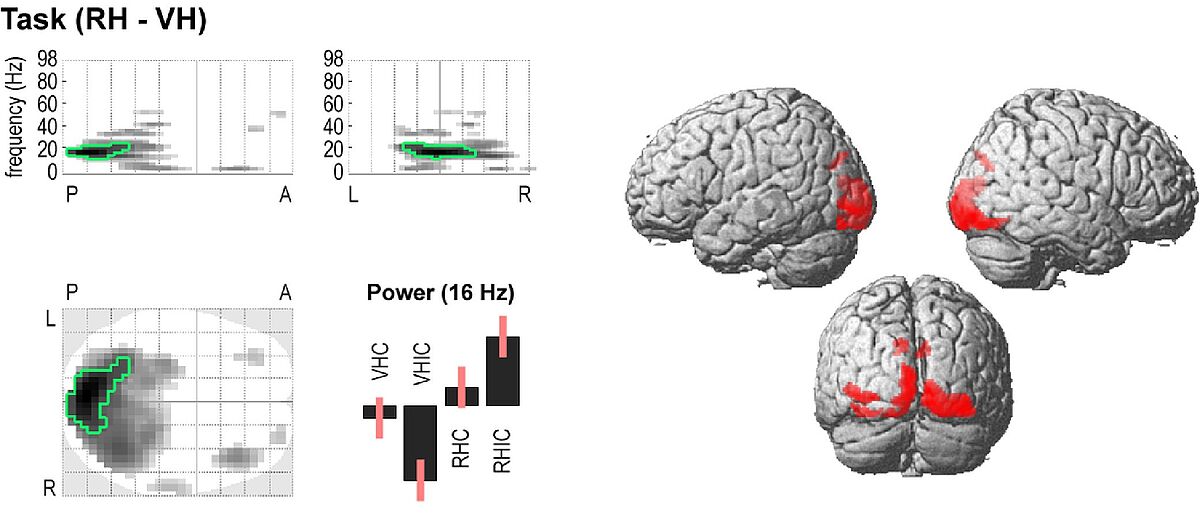
Copyright © 2020 Limanowski & Friston, Cerebral Cortex, Volume 30, Issue 3, March 2020, Pages 1637–1648, https://doi.org/10.1093/cercor/bhz192 Under the Creative Commons CC BY license Cortical beta oscillations were modulated at the frequency of the grasping movement—especially when incongruent visual information (via a virtual hand) was relevant to a target tracking task and the perceived hand position was a distractor. This suggests rhythmic modulation of low-frequency oscillations depending on the movement goal. Copyright © 2023 the American Physiological Society. Wang & Limanowski, Journal of Neurophysiology, Volume 130, Issue 5, November 2023, Pages 1367-1372 https://doi.org/10.1152/jn.00338.2023 Separation of different processing steps of newly learned visual (virtual) hand movement feedback in the visuomotor system of the brain.
Copyright © 2017 Limanowski et al., NeuroImage, Volume 146, 1 February 2017, Pages 81-89, https://doi.org/10.1016/j.neuroimage.2016.11.009 under https://creativecommons.org/licenses/by-nc-nd/4.0/ (CC BY-NC-ND 4.0)
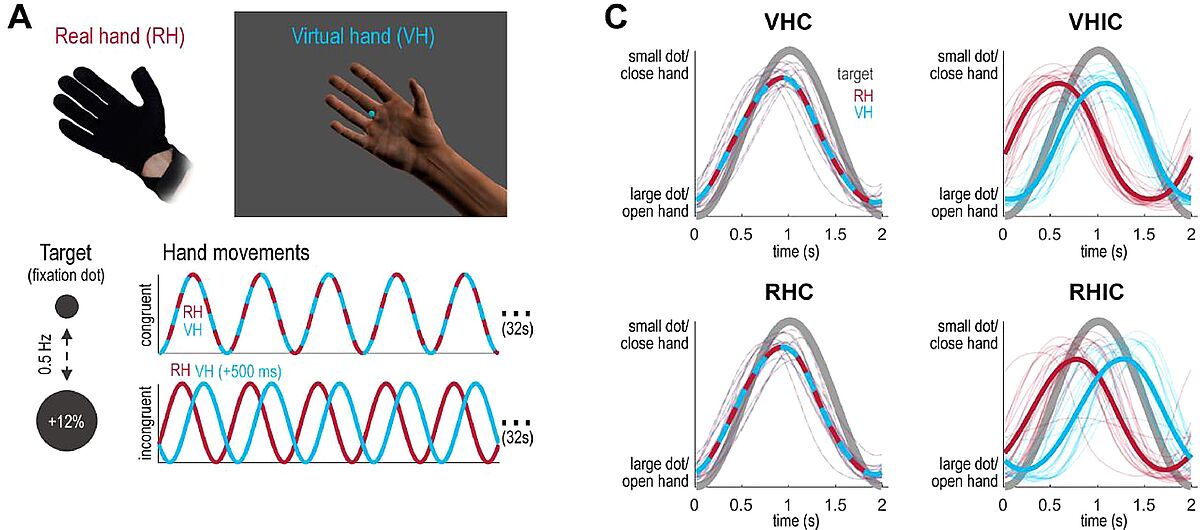
During dynamic hand movements, people can focus their attention on visual or proprioceptive movement information—here, we were able to separate the two sensory channels using a VR setup. This is reflected in the relative weighting of neural oscillations in the beta frequency band. Copyright © 2020 Limanowski et al. NeuroImage, Volume 222, 15 November 2020, 117267. https://doi.org/10.1016/j.neuroimage.2020.117267 Modified, reprinted under https://creativecommons.org/licenses/by-nc-nd/4.0/ (CC BY-NC-ND 4.0)
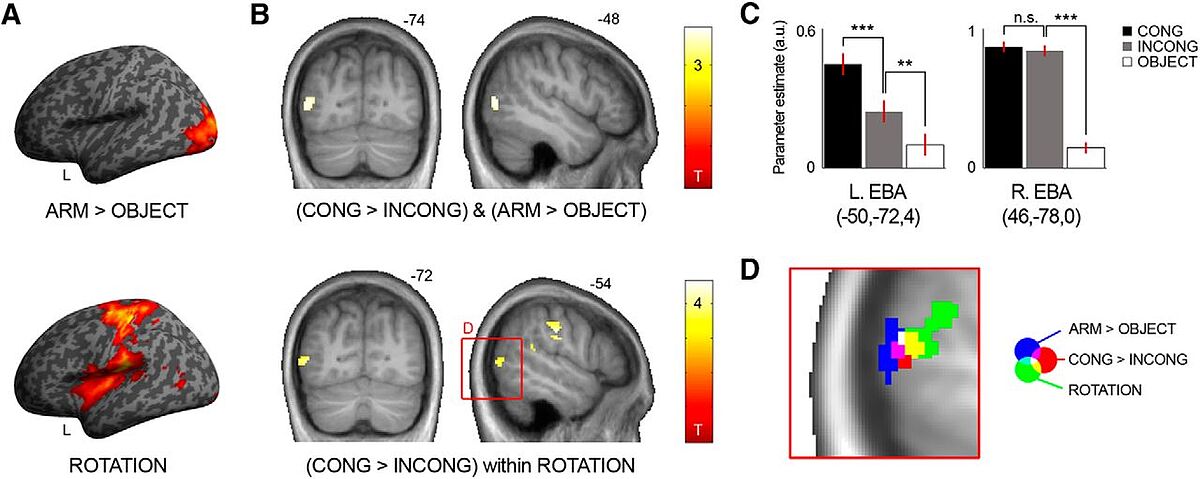
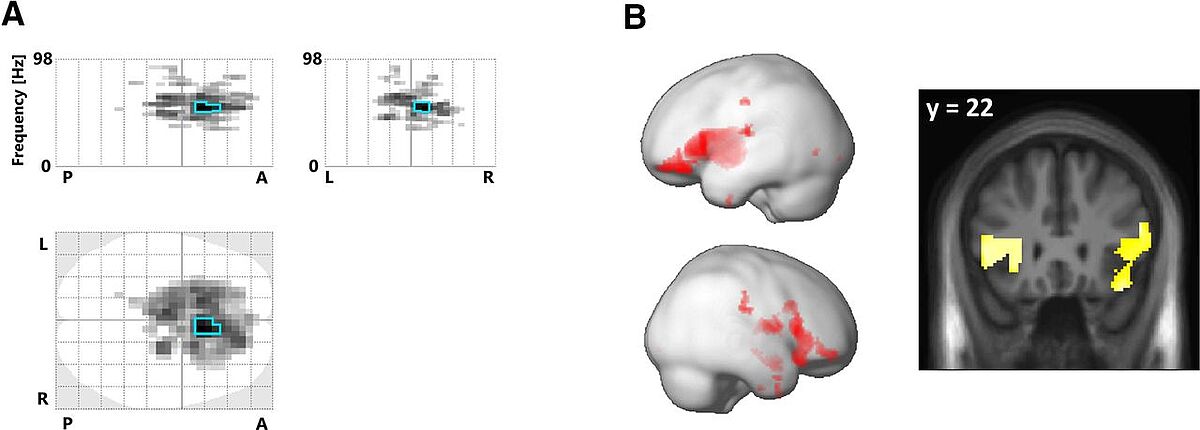
The left ,extrastriate body area, plays an important role in multisensory body representation, as it is specifically sensitive to visual body information, is involved in visuoproprioceptive comparisons, and represents changes in the unseen arm position. Copyright © 2016 Limanowski & Blankenburg Journal of Neuroscience 36 (9) 2582-2589; DOI: https://doi.org/10.1523/JNEUROSCI.3987-15.2016 under the Creative Commons Attribution 4.0 International License Description of information flow in the somatosensory system during the processing of tactile stimuli during active vs. passive body movement. Copyright © 2020 Limanowski et al., Cerebral Cortex, Volume 30, Issue 2, February 2020, Pages 607–617, https://doi.org/10.1093/cercor/bhz111 Under the Creative Commons CC BY license By replicating the same goal-directed VR task in the MR scanner and magnetoencephalography , we were able to show that behavioral errors are processed in the bilateral frontal operculum. Gamma oscillations corresponded to an amplified hemodynamic (BOLD) signal. Copyright © 2022 Quirmbach and Limanowski, eNeuro 14 February 2022, 9 (2) ENEURO.0524-21.2021; DOI: https://doi.org/10.1523/ENEURO. 0524-21.2021 under the terms of the Creative Commons Attribution 4.0 International license
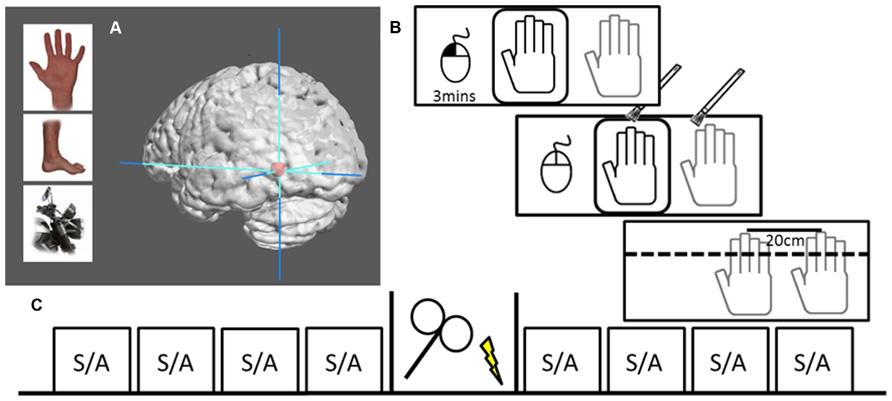
Evidence of a causal role of the extrastriate body area and body representation using Transcranial Magnetic Stimulation. Copyright © 2014 Wold et al, Front. Hum. Neurosci., Volume 8 - 2014, https://doi.org/10.3389/fnhum.2014.00390 Under the Creative Commons CC BY license